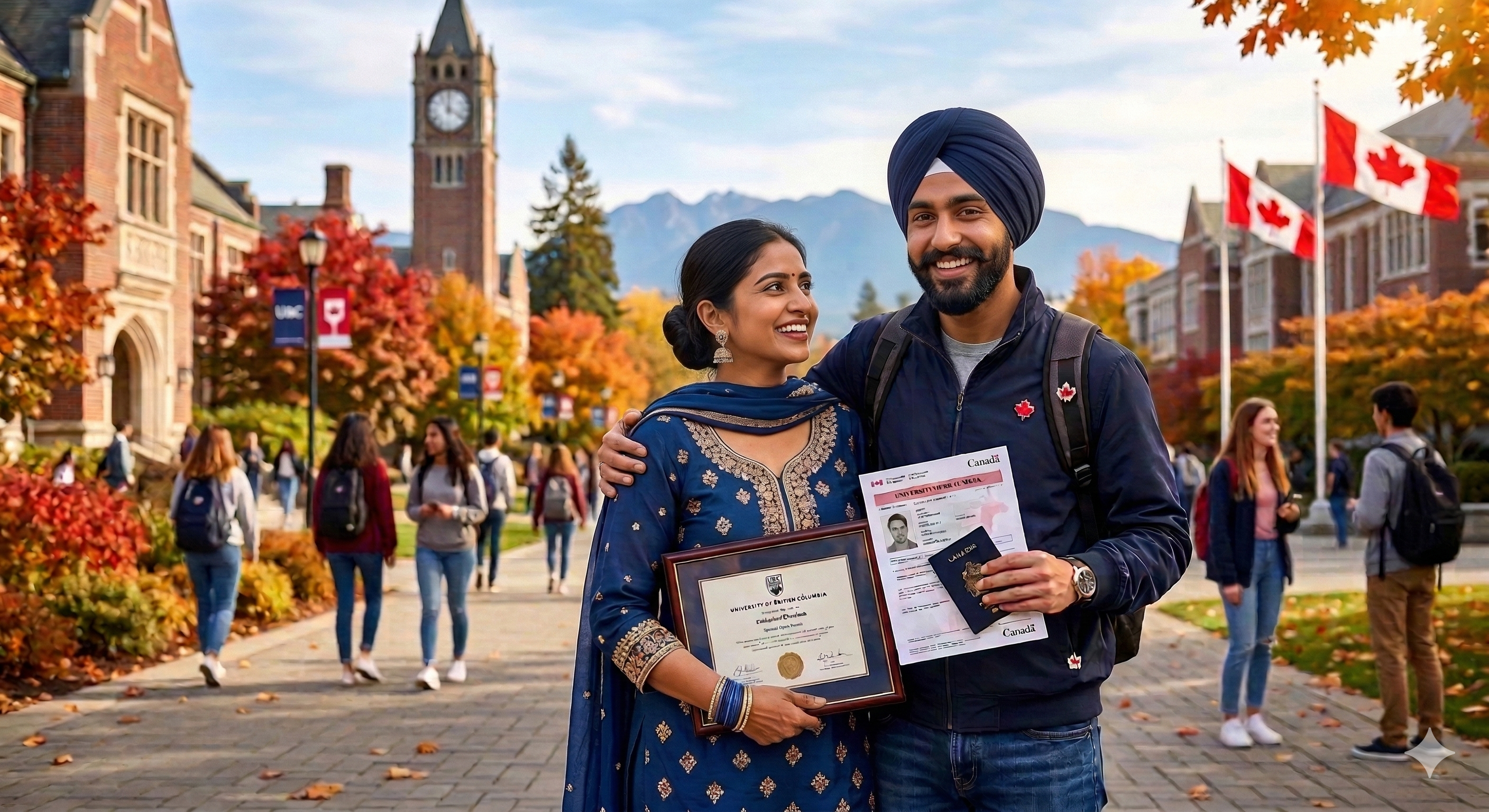
Many international students studying in Canada want their spouse or partner to join them and work while they study. The Spousal Open Work Permit (SOWP) allows the spouse or common-law partner of a student to legally work in Canada for almost any employer.
However, in recent years, the Canadian government introduced major policy changes in 2025 that significantly affect eligibility for spouses of international students.
In this guide, we explain:
- What the Spousal Open Work Permit (SOWP) is
- New 2025 rules for spouses of international students
- Eligibility requirements
- Required documents
- Application process
- Processing times
Therefore, understanding these rules is important before applying for a Canadian study permit.

What Is a Spousal Open Work Permit (SOWP) in Canada?
In simple terms, a Spousal Open Work Permit (SOWP) allows the spouse or common-law partner of a temporary resident to work for any employer in Canada.
In other words, unlike employer-specific permits, an open work permit does not require a Labour Market Impact Assessment (LMIA).
First, the benefits of the Spousal Open Work Permit include:
For example, with a spousal open work permit, your spouse can:
- First, spouses can work for any employer in Canada.
- Additionally, they do not need a Labour Market Impact Assessment (LMIA).
- Furthermore, the permit supports family reunification.
- Additionally, work in any Canadian province
- Moreover, change jobs freely
- Finally, work full-time or part-time
- Gain Canadian work experience
In addition, this permit is issued under Canada’s International Mobility Program (IMP) to support family reunification and labour market participation.
Major Changes to Spousal Work Permits in 2025
In recent years, Canada introduced new restrictions on family open work permits to manage the increasing number of temporary residents.
As a result, these changes significantly affect spouses of international students.
January 21, 2025 Policy Change
Starting January 21, 2025, spouses of international students can apply for a Spousal Open Work Permit only if the student is enrolled in specific advanced academic programs.
Eligible Programs Now Include
- Master’s degree programs lasting at least 16 months
- Doctoral (PhD) programs
- Certain professional degree programs
Programs That Usually No Longer Qualify
Most students in the following programs are no longer eligible for a spousal work permit:
- Undergraduate degrees
- College diploma programs
- Certificate programs
- Short-term academic programs
Consequently, this change means many international students cannot bring a spouse who can work in Canada.
Applications Submitted Before January 21, 2025
However, if a spousal work permit application was submitted before the policy change, it will still be processed under the previous rules.
For example, some important points include:
- Existing spousal work permits remain valid
- Permits remain valid until the expiry date
- Extensions may be possible depending on the student’s study status
Eligibility Requirements for Spousal Open Work Permit (2025)
To qualify for a Spousal Open Work Permit in Canada, both the student and the spouse must meet specific requirements.
Requirements for the International Student
The international student must:
- Hold a valid Canadian study permit
- Be studying full-time
- Attend a Designated Learning Institution (DLI)
- Be enrolled in an eligible advanced academic program
- Maintain legal immigration status in Canada
Students in most diploma or undergraduate programs are no longer eligible to sponsor a spouse for an open work permit.
Requirements for the Spouse or Common-Law Partner
The spouse must:
- For example, proof of relationship
- Additionally, the student’s study permit or work permit
- Submit a marriage certificate or proof of common-law partnership
- Meet general Canadian work permit eligibility requirements
- Maintain valid immigration status if applying inside Canada
- Finally, passport and identification documents
Immigration officers may request additional documentation to confirm the relationship.
Documents Required for a Spousal Open Work Permit
To apply, applicants must provide several documents:
- For example, proof of relationship
- Copy of the student’s study permit
- Student’s enrollment letter
- Proof of full-time study
- Passport copies
- Proof of financial support
- Digital photographs
- Completed work permit application forms
- Additionally, the student’s study permit
Therefore, providing accurate and complete documents helps avoid delays or refusal.
How to Apply for a Spouse Work Permit in Canada
The application process generally involves the following steps.
Step 1: Check Eligibility
Confirm that the student is enrolled in an eligible academic program under the new rules.
Step 2: Prepare Required Documents
Gather all required documents, including relationship proof and study permit documents.
Step 3: Submit the Application
Applications can be submitted:
- Online through the IRCC portal
- From outside Canada
- From inside Canada
Step 4: Biometrics and Processing
Applicants may need to provide biometrics and medical exams depending on their country of residence.
Processing Time for Spousal Open Work Permit
Generally, processing times vary depending on the country of application and workload at immigration offices.
Typical processing times:
- Outside Canada: 6–16 weeks
- Inside Canada: 2–4 months
However, delays may occur if documents are missing or additional checks are required.
Why Canada Restricted Spousal Work Permits
The Canadian government introduced these restrictions to control the growth of temporary residents.
Key reasons include:
- Managing population growth among temporary residents
- Reducing pressure on housing and public services
- Focusing immigration pathways on high-skilled education
- Aligning international student programs with labour market needs
These measures aim to balance immigration growth with economic priorities.
Important Things Students Should Consider Before Choosing a Program
In conclusion, students planning to study in Canada should carefully choose their programs.
Before applying for a Canadian study permit, consider:
- Whether the program allows a spousal open work permit
- Whether the program qualifies for a Post-Graduation Work Permit (PGWP)
- Future permanent residency pathways
Choosing the wrong program can lead to:
- The spouse not being able to work
- Increased financial pressure
- Fewer immigration opportunities after graduation
Proper planning can help students and their families avoid unexpected problems.
Final Advice for International Students in Canada
Canada remains one of the top destinations for international students due to its strong education system and immigration opportunities.
However, spousal work permit rules are now stricter than before.
Therefore, students planning to study in Canada should:
- Carefully review program eligibility
- Understand family immigration options
- Plan long-term immigration strategies
Taking the time to research these factors can help families build a stable future in Canada.
Frequently Asked Questions (FAQ)
Can my spouse work in Canada while I study?
Yes, but only if you are enrolled in an eligible advanced academic program, such as a master’s or PhD, under the 2025 rules.
Can spouses of diploma students get a work permit?
In most cases, no. The new policy removed eligibility for many diploma and undergraduate programs.
Are existing spousal work permits still valid?
Yes. Work permits issued before January 21, 2025 remain valid until their expiry date.
Discover more from Harry Immigration
Subscribe to get the latest posts sent to your email.